
A $1,000 loan is the workhorse of small-dollar borrowing: large enough to absorb the repair or replacement that a checking account cannot, small enough that it behaves like the friendliest personal loan on the menu, small enough that a year of roughly $95 payments retires it. It is also the size where borrowing decisions are made fastest and — for exactly that reason — where a few minutes of comparison pay off most. This Rely Credit guide covers who typically borrows a thousand dollars, why a small personal loan suits the job, what the personal loan payment looks like at real terms, the documents lenders ask for, and how a 1000 dollar loan moves from request to deposit through the Rely Credit network.
The frame to hold throughout: at this size, speed pressure is the main enemy of good decisions. A $1,000 loan priced five APR points apart costs only about $2.50 a month more — but the same haste that grabs the first offer also skips the eligibility check that prevents a decline, and declines cost days. Ready documents beat rushed clicks.
Who Borrows $1,000 — Four Real Situations
The typical $1,000 borrower is employed, hit by one specific expense — a repair, a replacement, a deposit — and needs the money inside a week.
Four situations account for most $1,000 personal loan requests in the Rely Credit network:
- Transport repairs. Brakes, a starter, two tires and an alignment — the bills that decide whether you get to work next week. A commuter's bicycle or transit pass gap fits here too.
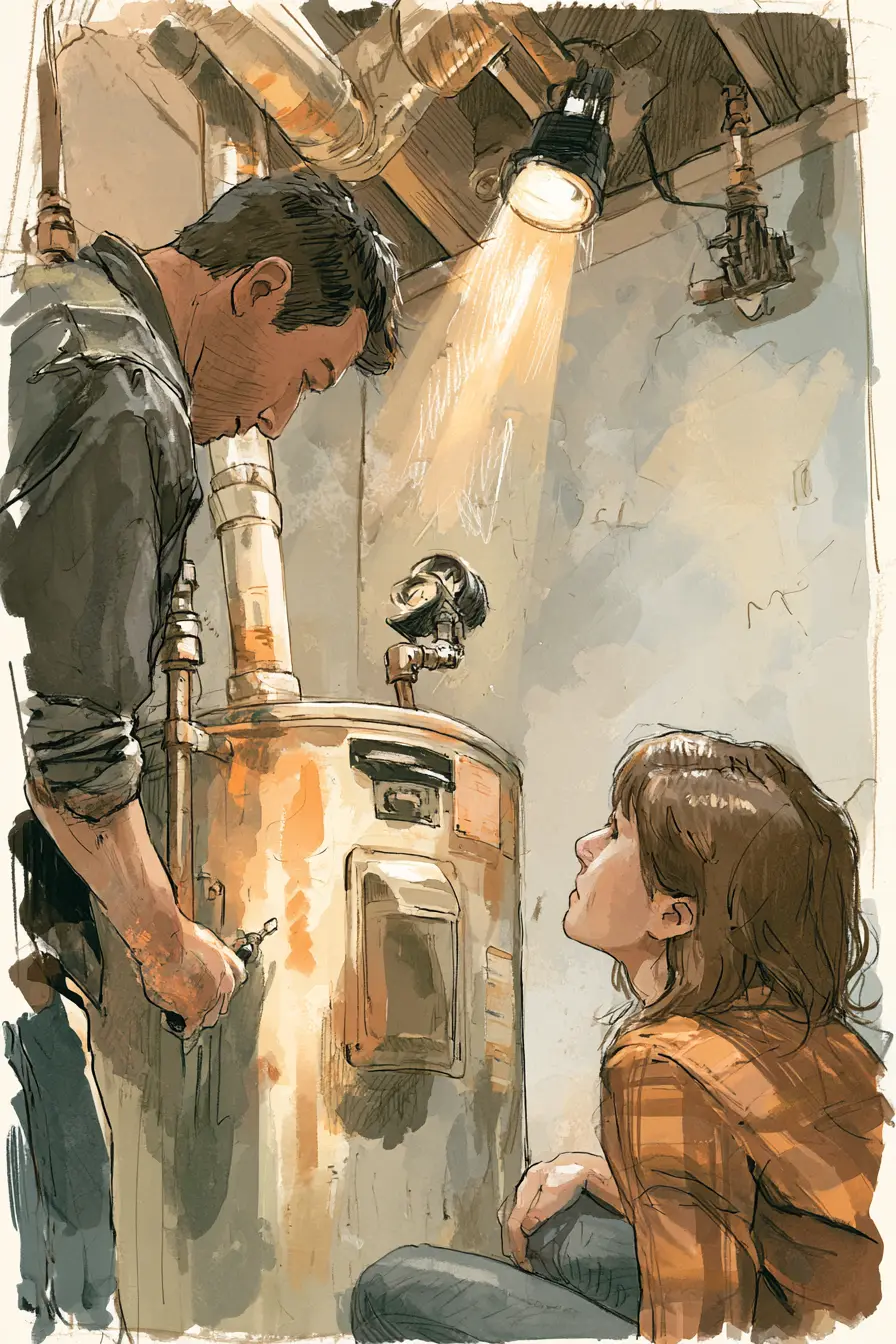
- Essential replacement. The laptop a semester or a job depends on, a refrigerator that died on a Sunday, the water heater that turned the morning shower cold.
- Housing friction. A security deposit that overlaps with the last month's rent at the old place, or a utility reconnection plus deposit after a move.
- Family and pet urgencies. A vet surgery quote, emergency travel to a relative, a school expense that arrived with two weeks' notice.

What unites them is specificity — a known number attached to a known thing. If your need is closer to "cushion for the month," pause: a personal loan that papers over a recurring shortfall returns next month with interest attached. The personal loans guide has an honest section on which situations borrowing genuinely fixes.
What a $1,000 Loan Costs Month to Month
At a representative 24% APR, a $1,000 loan costs about $179 a month for 6 months, $95 for 12, or $67 for 18 — pick the shortest that fits.
Three personal loan terms, one thousand dollars, all-in:
≈ $179/month on a $1,000 loan at a representative 24% APR — estimate only
Run your own numbers →≈ $95/month on a $1,000 loan at a representative 24% APR — estimate only
Run your own numbers →≈ $67/month on a $1,000 loan at a representative 24% APR — estimate only
Run your own numbers →The arithmetic worth noticing: stretching from 6 to 18 months cuts the payment by $112 but roughly triples total interest. On a 1,000 dollar loan the absolute dollars stay modest either way — that is the luxury of the size — but the habit matters, because the same stretch on a $5,000 loan is real money. Run any variation through the payment calculator, and read the rates guide to see where in the 6–36% APR range your file is likely to land before the first offer arrives.
| Route | Rate | Monthly | Paid off | Total interest |
|---|---|---|---|---|
| Card, minimum payments | 27% APR | starts ≈ $30 | 5+ years | ≈ $650+ |
| Card, fixed $95/month | 27% APR | $95 | ≈ 12 months | ≈ $150 |
| $1,000 loan, 12 months | 24% APR | ≈ $95 | 12 months | ≈ $135 |
Honest reading: against a disciplined fixed card payment the fixed loan wins only modestly — a personal loan's real edge is that the discipline is contractual, not optional, and the rate cannot drift upward mid-course.
Documents and Eligibility
Three documents clear most $1,000 loan verifications: photo ID, two recent pay stubs (or 60 days of bank statements), and your checking account details.
At this size personal loan lenders keep underwriting light, which means the process is mostly identity and income confirmation. Assemble before submitting:
- Government-issued photo ID — license, state ID, or passport
- Income proof: two recent pay stubs; if self-employed, 60 days of bank statements showing deposits; if on benefits, the award letter
- Checking account and routing numbers — deposit and autopay both run through this account
- A phone number and email you actually answer, because verification questions arrive fast and stall silently
Eligibility itself is the network standard — 18 or older, U.S. residency, verifiable income, active checking account — detailed on the eligibility page. A $1,000 loan is the most forgiving size for thin files: the payment-to-income math that decides small-dollar personal loan approvals is easiest to pass when the payment is $95.
Getting Matched Through Rely Credit
One request through Rely Credit returns several $1,000 loan offers at once; compare APR, payment, and total of payments, then finalize with the lender you pick.
The mechanics take minutes. Submit the form with $1,000 as the amount and your real income figures — rounding income up backfires at verification and costs more days than it saves. Offers arrive from network lenders individually, each stating its own APR, term, and payment. Because a 1,000 dollar loan is quick for lenders to underwrite, responses at this size tend to arrive fastest of any amount in the range. Choose one personal loan offer, complete verification with that lender directly, and funds commonly land the next business day — the funding speed guide traces the exact timeline hour by hour, including the cutoffs that decide same-day.
Rely Credit charges you nothing at any step, and declining every offer is a real option that costs only the five minutes you spent. That asymmetry — free look, real personal loan offers — is the entire argument for matching over walking into a single storefront and taking whatever the counter says.
Is $1,000 the Right Size?
If $1,000 turns out to be the wrong size, the neighboring guides cover the next step up — and stepping down to savings-plus-patience is sometimes the right call.
Sizing errors run both directions. If the repair quote came in at $1,400 and you are tempted to borrow $1,000 and float the rest on a card, reconsider: two debts at two rates for one expense is strictly worse than one right-sized personal loan — the $2,000 loan guide covers the next size up, where the payment at 12 months runs about $189. If the true need is $600 and the month simply needs to end, a smaller personal loan request is available (the network floors at $500), or six weeks of aggressive budgeting may close the gap without interest at all. The wrong answer is borrowing a round $1,000 loan because it is the number on the page; the right answer is borrowing the number on the invoice.
For context on what purpose fits which category — repair versus consolidation versus a medical balance — the personal loans and medical loans guides map the territory, and both link back to whichever amount their use cases actually require.
Running the Twelve Months on Rails
Treat the twelve months after funding as the actual product: autopay on paycheck-plus-two-days, one calendar note at the halfway point, and early payoff the moment a windfall allows.
A $1,000 loan is small enough that repayment can run on rails. Set autopay for two days after your paycheck lands and the personal loan payment never competes with a weekend; most Rely Credit network lenders trim the rate slightly for enrolling, which on this personal loan size fully covers the cost of a coffee and rounds down your total interest besides. Put one reminder in your calendar at month six: check the remaining balance, confirm no fee has appeared that you did not agree to, and ask yourself whether the tax refund or bonus that has arrived since could close the loan early. With no prepayment penalty — the norm across the network at this size — an early $400 principal payment in month seven cancels most of the interest the final five months would have charged.
The quiet bonus of a well-run small personal loan is the record it leaves. Twelve on-time payments on an installment account is exactly the pattern credit files reward, and borrowers who finish a $1,000 loan cleanly routinely see better personal loan pricing on any larger future request. The thousand-dollar fix, handled on rails, becomes the audition for the cheaper five-thousand-dollar loan you may want someday — that compounding of reputation is the most underrated return this size offers.
Three Mistakes at This Size
Three mistakes dominate at this size: borrowing before the quote is final, taking the first offer out of urgency, and letting a small personal loan run past eighteen months.
Borrowing before the number is real. The repair estimate says around a thousand and the request goes in that afternoon — then the final invoice reads $1,240 and a card absorbs the difference at 27%. Wait for the written quote; a personal loan request takes five minutes, so there is nothing to pre-empt. Urgency pricing. The first offer on a $1,000 loan is not always the best of the batch that matching returns; the offers arrive close together, and reading all of them costs minutes while the spread between best and worst routinely runs several APR points. The long tail. An eighteen-month term on a small personal loan drops the payment below $70, which feels effortless — and keeps a minor expense on your file for a year and a half while nearly tripling interest versus six months. Small borrowings should be brief; if only the longest term fits the budget, that is a signal the budget needs the sinking-fund treatment more than it needs the loan.
Dodge those three and a 1,000 dollar loan behaves exactly as advertised: one problem, one payment, one end date — and a personal loan file in better shape than it started.
Frequently Asked Questions
How fast can I get a $1,000 loan?
Next business day after final approval is the common case across the Rely Credit network, and same-day funding happens when your documents verify before the lender's afternoon cutoff. The smaller the request, the fewer the verification snags — a $1,000 loan is usually the fastest size in the range.
Can I get a $1,000 loan with bad credit?
Often, yes. At this size, lenders lean on income more than score: what they need to believe is that roughly $95 a month fits your budget for a year. Expect a personal loan APR in the upper twenties or low thirties with a bruised file, and compare every offer against the rates page before accepting.
What documents do I need for a 1,000 dollar loan?
Typically a government photo ID, proof of income (two recent pay stubs, or bank statements showing regular deposits if self-employed), and your checking account details. Having all three ready before you submit is the single biggest thing you can do to speed up funding.
Is a $1,000 loan worth it, or should I just use a credit card?
If you can clear the cost inside your card's grace period, the card is free — use it. If the balance would revolve for months at 25–30%, a fixed 12-month $1,000 loan usually costs less and is guaranteed to end. The comparison table on this page shows the break-even.